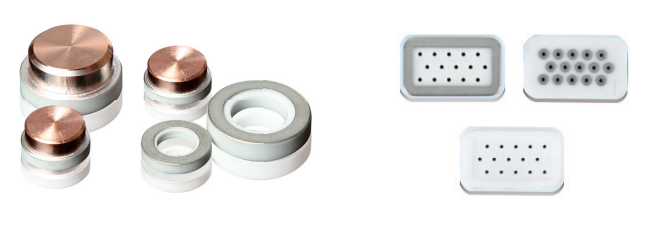
What to include in a sourcing brief
| Requirement | Information to provide |
|---|---|
| Component boundary | Ceramic ring, lid insert, metallized part or joined terminal assembly. |
| Geometry and mating parts | Drawing revision, tolerances, ceramic grade, terminal and lid metals, required finish. |
| Chemistry | Battery chemistry, electrolyte and other media exposure, cleaning or process chemicals. |
| Electrical isolation | Working voltage, insulation resistance and dielectric test conditions. |
| Joining and validation | Downstream joining process, process temperature, leak test and thermal-cycle requirements. |
| Production needs | Sample stage, volumes, traceability documents and delivery schedule. |
Common questions
Do I need a ceramic ring or a complete terminal assembly?
That depends on where the joining work happens. Specify whether your line needs a ceramic part, a prepared joining surface or an assembled terminal. Include the mating parts and assembly sequence.
Can one seal design work with different battery chemistries?
Compatibility needs review for the actual ceramic, metal, joining material and electrolyte combination. A part used in one battery design is not automatically qualified for another.
Material properties and another design’s test results are not a rating for your assembly. Requirements belong on the agreed drawing and acceptance plan.
Plan samples and technical review ↗